






















Exhibition Closes Sunday, November 6
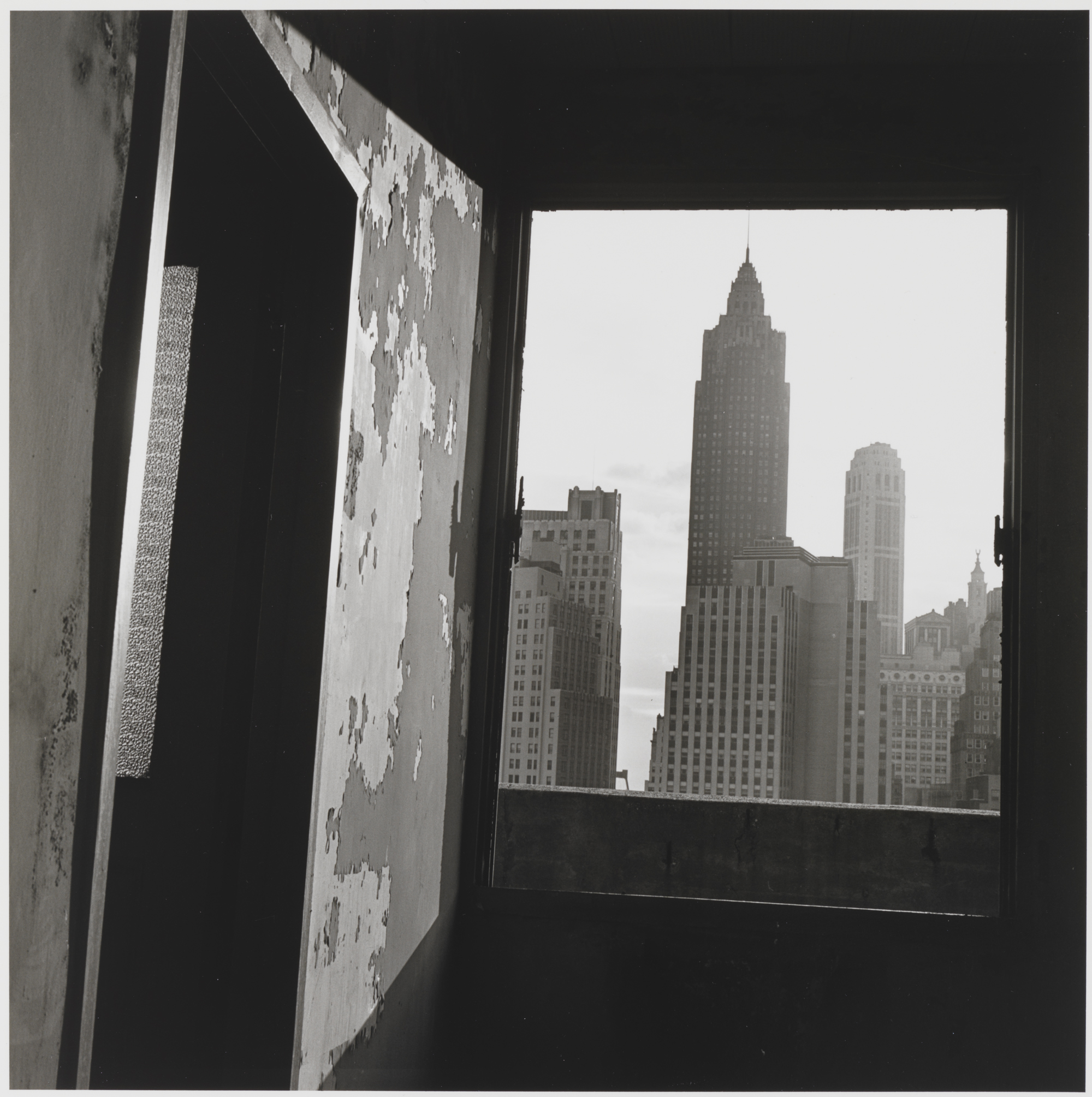
PRINCETON, NJ – Hailed by the press as “splendid,” The Life and Death of Buildings—a visually striking meditation on architecture and the passage of time in photography from the 1840s to the present—closes on Sunday, November 6, 2011. On view at its only venue, the Princeton University Art Museum, the exhibition comprises more than 115 works of art drawn from Princeton’s collections and a select list of public and private lenders.
“Buildings inhabit time, and photographs are made of time,” said Joel Smith, the Museum’s Peter C. Bunnell Curator of Photography. “Whenever the two intersect, it’s an occasion to observe the making of history—meaning memory, interpretation and meaning itself.”
The exhibition’s international roster of photographers includes Danny Lyon, William Henry Fox Talbot, Eduard Baldus, Alexander Rodchenko, Bernd and Hilla Becher, Alfred Stieglitz, Laura Gilpin and Zhang Dali. In the midst of their masterworks are photographs by unknown makers, such as a group of 36 postcards portraying homesteaders on the American plains posing beside their claim shacks: individual personal mementos that now tell a collective narrative of westward migration and settlement.
Casting a sidelight on photography’s unique historical voice is a group of major works in other media, each reflecting in its distinct way on time and the lives of buildings. Gordon Matta-Clark’s Splitting: Four Corners consists of the four roof corners of a demolished New Jersey house; in a gallery context, the empty space in their midst feels both sculptural and historical. A lengthily inscribed Yuan Dynasty painting of a seventh-century royal pavilion exemplifies a Chinese perspective that identifies a monument neither by its form nor by its materials but by the inaugural act of consecration that invests the structure with its meaning. Richard McGuire’s six-page comic Here (1989), a widely influential work in contemporary graphic narrative, keeps the eye fixed on one corner of a domestic interior but leapfrogs through time, pointedly juxtaposing future and past events to suggest the central yet ephemeral role of shelter in human fortunes.
The Life and Death of Buildings considers how photographers’ images reflect and inflect the passage of time. “Much as a building’s shifting function and circumstances substantially alter its significance, a photograph comes to be coauthored by history, growing layers of meaning to which its maker had no access,” Smith said.
The exhibition is accompanied by an illustrated catalogue, The Life and Death of Buildings: On Photography and Time, by Joel Smith. Published by the Art Museum and distributed by Yale University Press, the catalogue is available in the Museum Store.
Noticias/News