























EXCLUSIVA
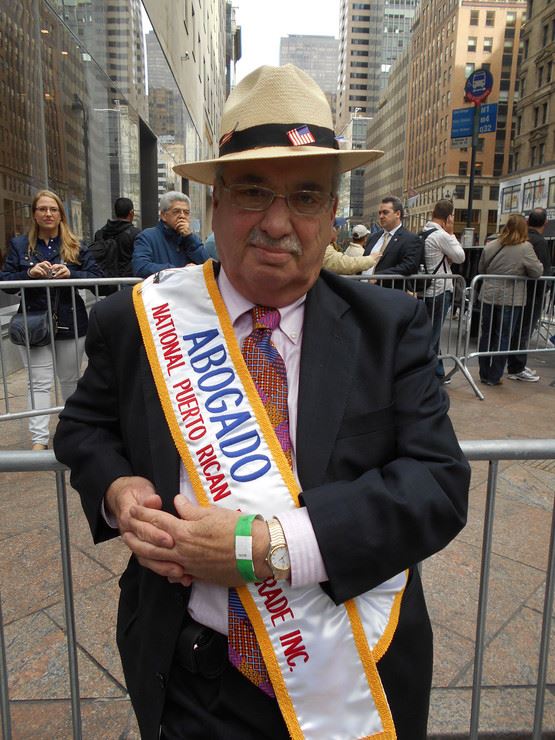
Foto MFS / Arquivo Impacto Latin News
Por Paul Bleifer
El Desfile está muy cerca de mi corazón. Recuerdo marchar durante 35 años en el Desfile usando mi banda, "Abogado De Desfile" junto al Gran Mariscal, los distintos Presidentes y Junta Directiva del Desfile, funcionarios electos y el líder de la comunidad Ramón S. Vélez, todos aplaudidos con mucho entusiasmo por la multitud que estaban en las aceras de la calle 44 a la calle 86 en la 5 ª Avenida. Estaban tan orgullosos de su bandera y su herencia que las calles se llenaron de vida como en ningún otro desfile de la Quinta Avenida. Así que cuando me entero de que algunas personas todavía piensan incorrectamente que el Desfile tiene un historia de conducta ilícita, es doloroso para mí y no puedo permanecer en silencio. Como dice la expresión , "alguna gente cree lo que quiere creer ", y se complacen en criticar y juzgar a los demás. Para algunos los hechos no importan por esa necesidad. Pero yo conozco los hechos y quiero dejar las cosas claras, dando la historia verdadera del Desfile 1970-2005.
Durante ese tiempo, el líder comunitario Ramón S. Vélez tenía la intención de crecer el conocimiento público de la cultura puertorriqueña, animando a los puertorriqueños a estar orgullosos de su cultura, y ayudando lograr mejor salud , mejores viviendas y una buena educación para una particpación más significativa en nuestra sociedad. No fue casualidad que el lema del Desfile fue "Autoestima" (Self Esteem), ya que la autoestima motivaría y permitaría a la gente a obtener una educación. El resultado de esa educación sería aún más autoestima para animar a la gente "a convertirse en todo lo que pueda ser" y revelar las habilidades ocultas que yacen dentro de todos nosotros.
Poco después de conocer a Ramón S. Vélez en 1971, me preguntó si le podría hacer algo pro bono sobre un problema que afectaba la habilidad de la comunidad puertorriqueña a participar en el Desfile. Una decisión había sido tomada por un juez de la Corte Suprema tomando control de la Junta Directiva e imponiendo a tres abogados para manejar el Desfile. Me reuní con el juez que tomó la decisión , y argumenté que no tenía autoridad para tomar esa decisión, ya que se requiere que organizaciones sin fines de lucro manejar sus propios asuntos y no ser influenciado o controlado por intereses externos. La Justicia aceptó y revocó su propia decisión, dirigiendo una nueva elección de la Junta Directiva. La elección se llevó a cabo, y los candidatos de Ramón S. Vélez ganaron la elección .
La próxima batalla legal era unos años más tarde, cuando Gerena Valentine demandó al Desfile alegando que no se llevó a cabo una elección de la Junta Directiva como es requerido por sus Estatutos, y que debería haber una orden judicial para detener el desfile hasta la celebración de nuevas elecciones. En términos prácticos, se podría decir que no iba haber Desfile ese año. Nos tuvimos que ir a la Corte para denegar la solicitud del mandato judicial, una medida necesaria si fuéramos a tener la seguridad de un desfile ese año.
Recuerdo caminar a la Corte Suprema en 60 Centre Street Nueva York, y pensar en el enorme importancia de la decisión que necesitábamos en ese caso. Me pareció que habían muchos más que los 30 o más pasos normales de la acera hasta el tribunal, mientras recogía la fuerza a lo largo del camino. Finalmente llegué a la sala del tribunal e hice nuestros argumentos. Ganamos y el caso fue desestimado.
Cuando salía de la Corte miré a los murales pintados en el techo y las paredes de 30 pies de altura del vestíbulo que representa la historia de los Estados Unidos desde la época de sus primeros pobladores. He leído los pensamientos brillantes de varios filósofos famosos. Mis ojos se detuvieron en la palabra "justicia" y sonrié. Nunca he estado más felíz que en cualquier otro momento de mi carrera legal, excepto, por supuesto, cuando ganamos otras victorias legales para el Desfile.
Unos años más tarde, otro reclamo fue presentado por Generna Valentine en un intento de conseguir que el departamento de policía que le diera la licencia para celebrar el Desfile Puertorriqueño. Aunque habíamos estado llevando a cabo el desfile desde hace varios años en ese momento, Valentine afirmó que se había convertido en el Presidente de una de las antiguas corporaciones abandonadas del desfile y tenía el derecho a celebrar el Desfile de ese año. Demostramos que nuestra corporación y organización fue justamente el encargado de gestionar el Desfile, y la demanda fue desestimada.
Luego las cosas se pusieron verdaderamente interesantes. En 1977, el Fiscal General presentó una demanda contra el Desfile basada en una falsa acusación de que había actuado de forma incorrecta en la administración de un programa de almuerzos de verano financiado por el Gobierno Federal, y que Ramón S. Vélez había pedido dinero prestado al Desfile .
En respuesta a la demanda judicial de 1977 que yo defendí, Ramón S. Vélez proporcionó cheques cancelados a la Corte que demostraron que él nunca pidió dinero prestado al Desfile, pero más bien él le prestó dinero al Desfile para que puedieran empezar las actividades ese año; como hacer un deposito en el hotel para el banquete anual. También proporcionó cheques cancelados a la Corte para mostrar que más tarde se le reembolsa la misma cantidad sin intereses que él prestó. Nunca hubo un pronunciamiento de la Procuraduría General o del tribunal que había alguna actividad inapropiada con estos arreglos financieros.
En cuanto al Programa de Almuerzo de Verano, en ese momento había una investigación de varias compañías diferentes en todo el país por el Gobierno Federal. Sólo había sospechas, pero no habían hechos que demostrara que el Desfile había participado en ninguna mala acción de su administración del Programa de Almuerzo de Verano en Nueva York. La preocupación era que algunos de los quesos destinados a los necesitados fueron tomados por parte de personas que no estaban en"necesidad ", como lo definen los reglamentos federales.
En respuesta a estas preocupaciones el Fiscal General obtuvo una orden judicial preliminar en 1978 con el propósito de mantener el "status quo", mientras que la acción estaba pendiente, ya que estaba en el interés público de mantener las cosas como estaban, y no cambiar las cosas hasta la Corte tuviera la oportunidad de ver la evidencia en cuanto a la validez a la demanda judicial. La orden preliminar siempre mantuvo que Vélez podría participar en Desfile, siempre y cuando él no actuaría como funcionario o como directivo. Eso no afectó el éxito del Desfile o de Ramón S. Vélez poder marchar en el desfile .
El interdicto preliminar de 1977 también declaró que "las partes procederán sin demora a juicio..." Durante los próximos 9 años, el Fiscal General no tomó ninguna medida en absoluto para hacerlo, y luego admitió que no tenía ninguna intención de hacerlo. En cambio, el Fiscal General acordó que el desfile debería empezar de nuevo con la creación de otra corporación. Así que en 1978 formamos una nueva corporación, para manejar el Desfile llamado "Desfile Puertorriqueño de Nueva York, Inc."
Luego, en 1986, el Fiscal General interpuso otra demanda contra el Desfile que también he defendido pro bono. La demanda no fue interpuesto contra la corporación de 1977 que manejaba el Desfile, ni en contra de Desfile Puertorriqueño de Nueva York , Inc. , pero en contra de otra nueva corporación, de la que yo había presentado un Certificado de Incorporación, " The New York Puerto Rican Day Parade, Inc." La demanda que finalmente fue descartada solicitó un mandamiento judicial contra Ramón S. Vélez para evitar que participara en el Desfile basado en la afirmación de que se había violado la orden judicial preliminar de 1978, actuando como oficial de desfile y por controlarlo. Muchos creyeron que se trataba de nada más de fuerzas políticas que buscaban disminuir la influencia política de Vélez aquí y en Puerto Rico.
Cuando el caso fue discutido en la Corte Suprema del Estado, el Juez Harold Baer Jr. declaró que la única alegación formulada por el Fiscal General fue que en 1986 Ramón S. Vélez estaba violando el mandamiento judicial de 1978 de la antigua corporación del Desfile. El juez escribió una opinión indicando que no había nada en la medida cautelar en la acción de 1977 para demostrar que Vélez realiza ninguna fechoría, ni había ninguna razón para pensar así, ya que la definición de un "mandato preliminar " era sólo para mantener el "status quo". Como cuestión de ley, como en este caso y todos los demás casos en el estado de Nueva York, una medida cautelar no es un fallo de que alguien hizo o no hizo algo mal, y por lo tanto es imposible tratar de usarlo con la acusación de algún delito.
Como resultado, el juez Baer Jr. rechazó la demanda contra todos los acusados, entre ellos el Desfile, Ramón S. Vélez y miembros de la Junta Directiva, al afirmar :
Por otra parte, el demandante (Fiscal General), admite que la actual conducta de Vélez y Torres, en y por sí misma, no violan de las leyes de este Estado. Sin una decisión sobre los meritos de la acción anterior ( 1977 ) de que los acusados (Torres y Vélez ) violaron la ley en relación con sus actividades para PRDP, Inc. el demandante no tiene fundamento para alegar que presente conducta de los acusados está en violación de la Ley Ejecutivo.
Ese rechazo se hizo cargo de 99 % de la demanda de 1986, pero preocupaciones se habían expresado en cuanto a la adecuación de la documentación para el reembolso de los gastos de bolsillo reembolsados a Federico Pérez, Presidente del Desfile . Después de una extensa investigación que incluyó el testimonio de todos los miembros de la Junta Directiva y otros testigos, así como un examen de los registros financieros del Desfile, se acordó de que no había delito por cualquiera de los miembros de la Junta, el Desfile o Federico Pérez.
En su lugar, se acordó que Federico no había mantenido un registro completo para ciertos gastos de bolsillo en ese viaje. Ejemplos de ello son la falta de registros escritos de los gastos de comidas de los miembros de la Junta Directiva con los alcaldes y otros funcionarios electos de varias ciudades de Puerto Rico que visitaron, junto con los registros de gastos de gasolina que especificaban los lugares conducidos por todo Puerto Rico, la fecha en que se hizo el viaje, con quién se reunió, lo que se discutió en la reunión, y el número de millas conducidas en cada viaje.
Federico tenía un acuerdo por separado con el Fiscal General, que declaró que no había la admisión de cualquier delito. Con el fin de acabar con el tiempo y los gastos de litigio, se acordó que no iba a participar en el Desfile como oficial durante tres años y que iba a pagar a desfile un total de aproximadamente 3.300 dólares por los gastos de bolsillo que le habían reembolsado. Los 3.300 dólares se pagaron de nuevo al desfile, y después de tres años Federico continuó sirviendo a su comunidad mediante la participación en el Desfile y su gestión.
Con el fin de aclarar de que no había ningún malentendido que todavía hubiese un mandamiento judicial de la demanda abandonada del 1977 en contra la empresa abandonada que había dejado de funcionar diez años antes, el 11 de abril de 1988, el Fiscal General y el Desfile firmaron una estipulación que fue presentada en Tribunal que dispuso la suspensión de la acción de 1977 en contra de Ramón S. Vélez y el Desfile con prejuicios .
Unos cinco años después de la destitución de la demanda de 1986, formamos otra corporación, la National Puerto Rican Day Parade, Inc. ya que Ramón S. Vélez tuvo la visión de reunir a los puertorriqueños de todas partes del país, y Ralph Morales estaba de Presidente durante esos nueve años, hasta el 2005.
Ahí lo tienen. La historia completa de todas las denuncias de irregularidades cometidas por el Desfile entre 1971-2005. Todos ellos mostraron ser falsas y resultaron en la desestimación de todas las demandas. Nunca hubo un pronunciamiento del Fiscal General o de un tribunal que había ningún delito por el Desfile, o Ramón S. Vélez, y nunca hubo una orden judicial que impedía a nadie de marchar en el Desfile.
Fue para mí un gran honor haber servido a la comunidad puertorriqueña y haber sido encomendado a representar el Desfile durante esos años. Ya no represento al Desfile Puertorriqueño desde el 2005 y ahora represento al Desfile de la Hispanidad, que tiene su propio desfile anual en la Quinta Avenida con la participación de 22 países de habla hispana. Por primera vez en muchos años, Puerto Rico estuvo representado en el año 2013 con una carroza y una banda de marcha con decenas de niños.
CASO ACTUAL
Una lectura completa del Acuerdo para Suspender (AD) con el fiscal general deja claro que no hay un robo de 1,4 millones de dólares al Desfile, sino más bien un acuerdo que Carlos Velasquez renunciaría el 1 millón que el Desfile le debe a él y el Desfile debía renunciar en su afirmación de que GALOS le debía 1 millón (más o menos) Incluso en la cifra de 1,4 millones de dólares que se afirma que Velasquez se apropió del Desfile, habría una tercera cuota debida a Velasquez por la recaudación de fondos (según lo permitido por leyes del Estado, y según un contrato aprobado por el Fiscal General) , según lo acordado por el Fiscal General, lo que se reduce a menos del 1,1 millón. Por lo tanto él no está pagando un miserable 100,000 dólares para cubrir una deuda de 1,4 millones de dólares, pero para cubrir la diferencia entre lo que se le debe a él y él le debía al desfile.
La deuda de un millón de dólares del Desfile a Velasquez surgiá de su dinero que él prestó al Desfile durante un período de 5 o 6 años, ya que cada año se gasta más dinero que el que se recauda. Su dinero era necesario para poner en marcha las actividades de cada año en vista que el Desfile no tenía bienes para hacerlo, como por ejemplo haciendo depósitos para el banquete, alrededor de $ 40,000 en primas de seguros, etc.
El dinero que se reclama que Velasquez le debe al Desfile es un cálculo del total de fondos recaudados para el Desfile por Velazquez durante un período de años, pero esa cifra no tiene en cuenta el dinero que él gastó para pagar los gastos del desfile y los costos de la producción de la actividad publicitaria, dinero que fue proporcionado por los patrocinadores. El dinero no se considera "contribuciones de caridad" por los patrocinadores, sino como "publicidad".
Como no había un "lavado" completo del dinero que cada parte debía al otro, Velasquez acordó pagar $100,000 en un período de tiempo, simplemente porque no existen activos con qué pagar esa suma en este momento.
El AD afirma que GALOS se "apropió indebidamente de los fondos para su propio beneficio". Según la definición del AG en conversaciones con el Sr. Nachman, esto no significa que el dinero fue "robado" sino que el dinero no fue pagado por GALOS directamente al desfile como es requerido por la normativa estatal. En su lugar fue utilizado por GALOS para pagar las obligaciones del Desfile según lo acordado entre el Desfile y GALOS. Esto no significa que el dinero fue robado, ya sea por el Desfile o por GALOS.
Como se acordó en el AD, Velasquez está poniéndose a disposición para ayudar a la nueva junta directiva con el desfile de 2014 sin ningún tipo de costo, proporcionado sus registros y experiencia en la producción del Desfile. Así como todos esperamos, él está a la espera de un exitoso Desfile 2014, y se enorgullece de continuar participar hacia esa meta.
En cuanto a la Fundación Diversidad, no se encontró que la fundación o Debra Martínez, como Directora Ejecutiva, saqueó el desfile o recibió un centavo del Desfile. Su función era la de realizar eventos como "organizadora de fiestas" para la Fundacón Diversidad de la misma manera como lo había estado haciendo por muchos años antes de que ella fuera contratada para llevar a cabo ese trabajo. Ella no tenía ninguna participación en la recaudación de las contribuciones o la publicidad, ni en el pago de los gastos incurridos. Ella no tuvo ninguna implicación fiscalizadora alguna y no autoridad para firmar cheques. La única reclamación por el AG es que los fondos de becas, tanto del Desfile y Diversidad se mezclan entre sí, pero desde que Martínez no tenía ninguna implicación fiscal, ella no tenía ninguna participación ni conocimiento de ello.
Los activos restantes de la Fundación Diversidad, todo lo que se ha pagado al AG es $ 240. El AD establece específicamente que el dinero recaudado por la Fundación Diversidad fue gastado en becas y otros eventos culturales. Estos eventos contaron con la participación de los patrocinadores que contribuyeron con el dinero y eran muy conscientes de la manera en que se gastó el dinero.
Martínez acordó no participar en ninguna actividad del Día del Desfile Nacional Puertorriqueño que había hecho anteriormente porque esto se insistió en el Fiscal General, no porque el dinero fuera robado, y porque ella no tenía la suma muy importante de dinero para los gastos legales que habría requerido para defender la reclamación del Fiscal General. Incluso sin ningún litigio, excepto una moción para desestimar la demanda en su contra sobre la base de toda la evidencia obtenida por el Fiscal General le habría costado $ 10.000, dinero que no tenía.
Lo que la gente está preguntando, sin respuestas en la prensa, es "cómo fue escogida la nueva junta de directores?". El anuncio dice que el Fiscal General tenía que aprobar el nombramiento de la Junta, pero la pregunta que se plante es, ¿quién eligió a los candidatos presentados al Fiscal General para su aprobación? ¿Fueron los 3 miembros restantes de la junta directiva o alguien más - como los políticos? ¿Fueron los 3 miembros restantes que dieron sus "opciones" o no? ¿Fue alguno de los presentados rechazado, o los 3 restantes miembros de la junta no tuvieron más remedio que aceptar candidatos que se les presentá a ellos?
TRADUCIDO AL ESPAÑOL POR IMPACTO LATIN NEWS
TIME TO SET THE RECORD STRAIGHT ON DESFILE
By Paul Bleifer
Desfile is very close to my heart. I remember marching in Desfile wearing my sash, “Abogado De Desfile” for 35 years with the Grand Marshals, the various Presidents and Boards of Directors of Desfile, elected officials and Community Leader Ramon S. Velez, all cheered by the overwhelmingly enthusiastic crowds overflowing the sidewalks from 44th Street to 86th Street on 5th Ave. They were so proud of their flag and heritage that the streets came alive as in no other parade that was ever on Fifth Ave. So when I hear that some people still incorrectly think that Desfile has a history of engaging in wrongful conduct, it is painful to me and I cannot remain silent. As the expression goes, “some people believe what they want to believe,” and take pleasure in criticizing and judging others. To some the facts do not matter because of that need. But I have the facts and want to set the record straight by telling you the real history of Desfile from 1970 to 2005.
During that time Community Leader Ramon S. Velez was intent on making the general public aware of the Puerto Rican culture, encouraging Puerto Ricans to be proud of their culture, and enabling them to achieve better health, housing and a good education leading to more meaningful participation in our society. It was no accident that the motto of Desfile was “Self Esteem,” since self esteem would motivate and enable people to obtain an education. The result of that education would be still more self esteem to encourage you “to become all that you could be” and reveal the hidden abilities that lie within all of us.
Shortly after I met Ramon S. Velez in 1971 he asked whether I could do something pro bono about a problem affecting the ability of the Puerto Rican Community to participate in Desfile. A decision had been made by a Supreme Court Justice taking control from the Board of Directors and appointing three attorneys to manage Desfile. I met with the Justice who made the decision, and argued that he had no authority to make that decision, since Not-for-Profit Corporations are required to manage their own affairs and not be influenced or controlled by outside interests. The Justice agreed and reversed his own decision, directing an election of the Desfile Board of Directors. The election was held, and the Ramon S. Velez slate of candidates won the election.
The next legal battle was a few years later when Gerena Valentine sued Desfile claiming that an election of its board members was not held as required by its By-Laws, and that there should be an injunction to stop the Parade until a new election was held. In practical terms, it could mean that there could be no Parade that year. We had to get a Justice to deny the request for an injunction if we were to be assured of a parade that year.
I remember walking up the Supreme Courthouse steps at 60 Centre Street NY, and thinking of the enormous significance of the decision we needed in that case. There seemed to be many more than the usual 30 or so steps from the sidewalk to the Courthouse that day as I gathered strength along the way. I finally got to the courtroom and made our arguments. We won and the case was dismissed.
When I was leaving the Courthouse I looked at the murals painted on the ceiling and walls of the 30 foot high lobby depicting the history of the United States from the time of its first settlers. I read the brilliant thoughts of several famous philosophers. My eyes stopped at the word “justice” and I smiled. I was never more happy than at any other time in my legal career, except of course when we won other legal victories for Desfile.
A few years later another claim was brought by Generna Valentine in an attempt to get the police department to give him the permit to hold the Puerto Rican Parade. Although we had been holding the parade for several years at that time, Valentine claimed that he had become President of one of the old abandoned parade corporations and had the right to hold the Parade that year. We showed that our corporation and organization was rightly in charge of managing Desfile, and the claim was dismissed.
Then things really got interesting. In 1977 the Attorney General brought a law suit against Desfile based on a false claim that it had acted improperly in administering a Summer Lunch Program funded by the Federal Government, and that Ramon S Velez had borrowed money from Desfile.
In response to the 1977 law suit I defended, Ramon S. Velez provided cancelled checks to the Court showing that he never borrowed money from Desfile, but that he leant money to Desfile to enable it to get the activities started that year, like making a deposit on the hotel for the annual banquet. He also provided cancelled checks to the Court to show that he was later repaid the same amount he leant to the Parade without interest. There was never a finding by the Attorney General or the court that there was any improper activity with these financial arrangements.
As for the Summer Lunch Program, at that time there was an investigation pending of several different companies all over the country by the Federal Government. There were only suspicions, but no facts to show that Desfile had participated in any wrong doing in its administration of the Summer Lunch Program in New York. The concern was that some of the cheese intended for those in need had been taken by persons who were not in “need” as defined by federal regulations.
In response to these concerns the Attorney General obtained a preliminary injunction in 1978 for the purpose of maintaining the “status quo” while the action was pending, since it was in the public interest to keep things as they were, and not to change things until the Court had an opportunity to see the evidence as to whether there was any validity to the law suit. The preliminary injunction provided that Velez could participate in Desfile, so long as he did not act as an officer or as its agent. That did not affect the success of Desfile or Ramon S. Velez marching in the parade.
The 1977 preliminary injunction also stated that “the parties shall proceed expeditiously to trial of the action….” During the next 9 years the Attorney General took no steps whatsoever to do so, and later admitted that it had no intention to do so. Instead, the Attorney General agreed that the Parade should get a fresh start by the creation of another corporation. So in 1978 we formed a new corporation, to manage Desfile called “Desfile Puertorriqueno de Nueva York, Inc.”
Then in 1986 the Attorney General brought another law suit against Desfile which I also defended pro bono. The law suit was not brought against the 1977 corporation managing Desfile, or against Desfile Puertorriqueno de Nueva York, Inc. but against another new corporation, for which I had filed a Certificate of Incorporation, “The New York Puerto Rican Day Parade, Inc.” The law suit which was eventually dismissed requested an injunction against Ramon S. Velez to prevent him from participating in the Parade based on the claim that he had violated the 1978 preliminary injunction by acting as an officer of Desfile and controlling it. Many believed that this was nothing more than political forces at work by those seeking to diminish Velez’s political influence here and in Puerto Rico.
When the case was argued in State Supreme Court, Justice Harold Baer, Jr. stated that the only claim made by the Attorney General was that in 1986 Ramon S. Velez was violating the 1978 injunction against a different Desfile corporation. The Justice wrote an opinion stating that there was nothing in the preliminary injunction in the 1977 action to show that Velez engaged in any wrongdoing, nor was there any reason to think so, since the definition of a “preliminary injunction” was only to maintain the status quo. As a matter of law, as in this case and all other cases in New York State, a preliminary injunction is not a finding of any fact that anybody did or did not do something, and it is therefore impossible to try to use it to claim any wrongdoing.
As a result, Justice Baer, Jr. dismissed the lawsuit against all the defendants, including Desfile, Ramon S. Velez and Board members, by stating:
Moreover, plaintiff (Attorney General) admits that the present conduct of Velez and Torres, in and of itself, is not violative of any laws of this State.
Without a determination on the merits in the prior (1977) action that the defendants (Torres and Velez) violated the law in connection with their activities for PRDP, Inc. the plaintiff does not have a basis for alleging that defendants’ present conduct is violative of the Executive Law.
That dismissal took care of 99% of the 1986 lawsuit, but concerns had been expressed as to adequacy of documentation for reimbursement for out of pocket expenses reimbursed to Federico Perez, President of Desfile. After an extensive investigation which included the testimony of all the board members and other witnesses, as well as an examination of the financial records of Desfile, it was agreed that there was no wrongdoing by any of the Board members, Desfile or Federico Perez.
Instead, it was agreed that Federico had not kept complete records for certain out of pocket expenses on that trip. Examples are lack of written records for expenses for meals of members of the Board of Directors with Mayors and other elected officials of various towns in Puerto Rico they visited, along with records of gasoline expenses which specified the places driven to all over Puerto Rico, the date on which the trip was made, who he met with, what was discussed at the meeting, and the number of miles driven on each trip.
Federico had a separate agreement with the Attorney General which stated that there was no admission of any wrongdoing. in order to put an end to the time and expense of litigation it was agreed that he would not participate in Desfile as an officer for three years and that he would pay back to Desfile a total of approximately $3,300 for the out of pocket expenses it had reimbursed to him. The $3,300 was paid back to the Parade, and after three years Federico continued to serve his Community by participating in Desfile and its management.
In order to be sure that there could be no misunderstanding that an injunction still existed from the abandoned 1977 law suit against a corporation which had ceased functioning ten years earlier, on April 11, 1988 the Attorney General and Desfile signed a Stipulation which was filed in Court which provided for the discontinuance of the 1977 action against Ramon S. Velez and Desfile with prejudice.
About five years after the dismissal of the 1986 law suit, we formed another corporation, the National Puerto Rican Day Parade, Inc., since Ramon S. Velez had the vision of bringing together Puerto Ricans from all over the country, and Ralph Morales was President for nine years until 2005.
There you have it. The complete history of all claims of wrongdoing against Desfile from 1971 to 2005. All of them were shown to be false and resulted in the dismissal of all lawsuits. There was never a finding by the Attorney General or a Court that there was any wrongdoing by Desfile, or Ramon S.Velez, and there was never a Court Order which prevented anyone from marching in Desfile.
It was my great honor to have served the Puerto Rican Community and been entrusted with representing Desfile during those years. I no longer represent the Puerto Rican Parade since 2005 and now represent the Hispanic Parade which has its own annual parade on 5th Ave. with the participation of 22 Hispanic countries. For the first time in many years, Puerto Rico was represented in 2013 with a float and marching band with dozens of children.
CURRENT CASE
Facts for your consideration
A complete reading of the Agreement to Discontinue (AD) with the Attorney General makes it clear that there is no "stolen" $1.4 million from the Parade, but rather an agreement that Velasquez would give up the 1 million the Parade owed him and the Parade would give up its claim that GALOS owed it 1 million (more or less) Even on the 1.4 million dollar figure which is claimed that Velazquez owned the Parade, there would be a one third fee due to Velasquez for fund raising (as permitted by State law, and by a contract approved by the AG), as agreed by the AG, thereby reducing it to less than 1.1 million.He is therefore not paying a "measly $100,000" to cover a 1.4 million dollar debt, but to cover the difference between what was owed to him and he owed the Parade.
The million dollar debt from the Parade to Velazquez arose from his lending the Parade money over a period of 5 or 6 years since each year they were spending more that the money than was raised. His money was necessary to start up activities each year since the Parade had no assets to do so, such as by making deposits for the banquet, about $40,000 in insurance premiums, etc.
The money claimed to be due to the Parade by Velazquez is a calculation of total funds raised for the Parade by Velazquez over a period of years, but that figure does not account for the money he spent to pay for Parade expenses and for the expense of the production of the advertising activity for which the money was provided by the sponsors. The money is not considered "charitable contributions" by sponsors, but rather "advertising."
Since there was not a complete "wash" of the money each party owed the other, Velazquez agreed to pay $100,000 over a period of time, simply because there are no assets with which to pay that sum at this time.
The AD states that GALOS "misappropriated" the funds "for his own benefit." As defined by the AG in discussions with Mr Nachman, this does not mean the money was "stolen" but that the money was not paid by GALOS directly to the Parade as required by State regulations. Instead it was used by GALOS to pay the obligations of the Parade as agreed between the Parade and GALOS. It does not mean that the money was stolen either by the Parade or by GALOS.
As agreed in the AD, Velasquez is making himself available to assist the new board of directors with the 2014 Parade without any fee, by providing his records and expertise in parade production. Just as we all are, he is looking forward to a successful 2014 Parade, and is proud to continue participate toward that goal.
As to Diversity, there was not finding that either Diversity or Debra Martinez, as "Executive Director" "looted" the Parade or received one dime from the Parade. Her function was to hold events as a "party planner" for Diversity in the same manner as it had been operating for many years before she was hired to perform that job. She had no involvement in the collection of contributions or advertising, nor in the payment of any expenses incurred. She had no fiscal involvement whatsoever and no authority to sign checks. The only claim by the AG is that the scholarship funds of both the Parade and Diversity were mixed together, but since Martinez had no fiscal involvement, she had no participation nor awareness of it.
The remaining assets of Diversity, all of which has been paid to the AG is $240. The AD specifically states that the money collected by Diversity was spend on scholarships and other cultural events. These events were attended by the sponsors who contributed the money and were well aware of the manner in which the money was spent.
Martinez agreed not to participate in any National Puerto Rican Day Parade activity which she had previously done was because it was insisted upon by the AG, not because money was stolen, and because she did not have the very substantial sum of money for legal fees it would have required to defend the AG claim. Even without any litigation except a motion to dismiss the claim against her based upon all the evidence obtained by the AG would have cost $10,000, money which she did not have.
The question people are asking, with no answers in the press, is "how was the new board of directors chosen?" The AD says that the AG had to approve their appointment to the Board, but the question being raised is who chose the candidates submitted to the AG for approval. Was it the 3 remaining members of the board or someone else - like politicians? Were the 3 remaining members provided with their "choices" or not? Were any of those submitted rejected, or did the 3 remaining board members have no choice but to accept candidates provided to them.
Thank you for consideration of these matters.
Paul Bleifer